
This is a detailed history of a small area in the centre of Ascot, which principally covers the period from the 1860s through to the 1930s. It was researched and written by a local resident.
As shown in the picture below which was taken in 1923, it covers the Stag public house and the old Fire Station (now the Hyperion Tile shop) on the High Street, along with the various buildings behind them up to the Racecourse. The grand building on the right was The Grange with its grounds and a row of gardeners’ cottages.
Events over this period include: the rebuilding of the Stag public house; the building of what is now the old Fire Station; the eventual advent of a drainage system; and the later arrival of the Thames Valley Bus Garage. The main character is Mr Charman, a local builder and councillor who was also involved with the fire brigade and the Racecourse, but it also includes Mr Shipley, a landowner, plus Baron and Lady Huddleston who lived at The Grange.
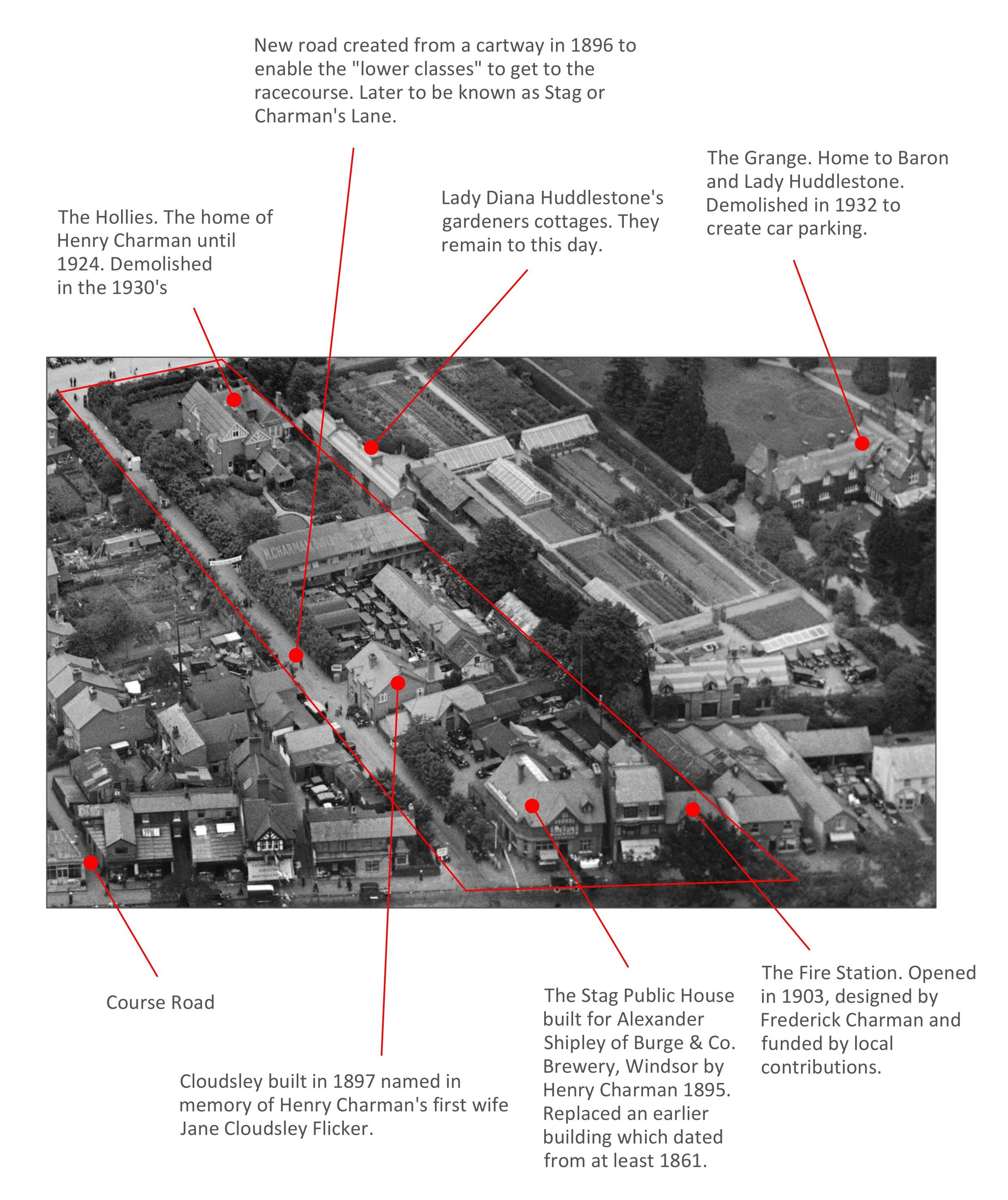
1861. The original Stag beer-house was present on the site from at least 1861 when, on a day after Ascot Races in 1861, a Francis Hughes stole from the landlord Thomas Franklin a coat and stick. Francis Hughes was subsequently to be sentenced to three months imprisonment for the theft. Thomas Franklin was to remain the landlord of the Stag for many years. As a beer-house as opposed to a public house, only beer and no spirits were sold. The property was owned by Alexander Shipley of Burge and Co, Brewery of Windsor. The original Stag pub was set back from the road on a plot of land between what is now the old Fire Station down to a cartway alongside the Stag pub which served the rear of the properties in Course Road and the properties to the rear of the pub, leading on down to the Racecourse.
Prior to being called the Stag it may have been known as the Four Horse Shoes. Aaron Tucker was then the landlord, the police constable lived at one end of the property, and the field behind was a favourite camping ground for gypsies during race week.
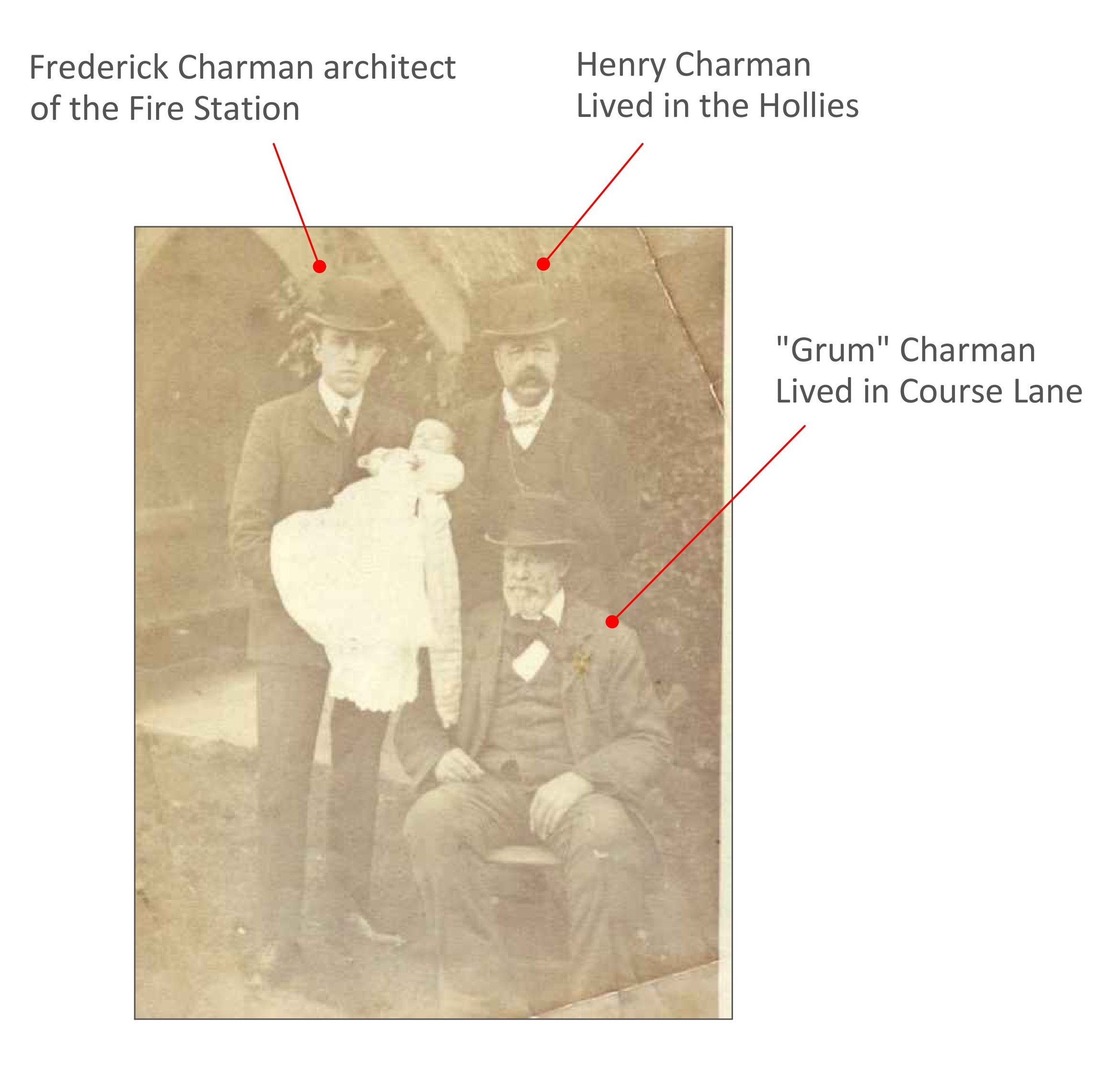
1890. By the early 1890s the field behind the Stag had been developed to provide workshops and a house, The Hollies, which were rented to Henry Charman a local builder. The cartway to the side of the Stag provided access to the rear of the properties in what is now Course Road. In June 1890 Alfred Abbey, an employee of Mr Charman who lived in one of the properties in Course Road, suffered water poisoning due to a contaminated well. Sewage was a big problem in Ascot High Street at the time. To quote a report of the time “In the neighbourhood of Ascot High Street the houses are so aggregated together, and the amount of ground attached to each so small, that the contents of cesspools have to be removed frequently, and it is said that great nuisance, practically continuous, is thereby occasioned”. Mains water was laid on to Course Road shortly after Mr Abbey’s poisoning. Another resident of Course Road unfortunately died due to the contaminated well. As a councillor, Mr Charman urged the council to install a main drainage scheme, the progress of which was slow but greatly championed by him for many years. Alfred Abbey survived, and in 1904 he is still working for Mr Charman, and still living in Course Road. In that same year, he is charged with mistreating one of Mr Charman’s horses, and is subsequently fined five shillings by the local Magistrate.
1894. Henry Charman’s business expanded during the mid-1890s, building a lot of the improved racecourse buildings and becoming a major employer in the process. Unfortunately, his workshops were burgled in 1894, the thieves no doubt assuming his premises would contain rich pickings.
1895. In April 1895 the owner of the Stag beer-house, Alexander Shipley, decides to sell at auction the Stag together with the adjoining workshops and house rented by Henry Charman. From the sales particulars, we know the whole site measured 137ft x 476ft (The present day plot from the High Street back to the racecourse aligns with these dimensions). However, in May 1895 it is announced that Alexander Shipley had sold the property prior to auction by private treaty, the buyer being a Bertie Mason. However, Mr Shipley had retained the beer-house and frontage onto the High Street, selling only the property rented to Henry Charman and the cartway to the side.
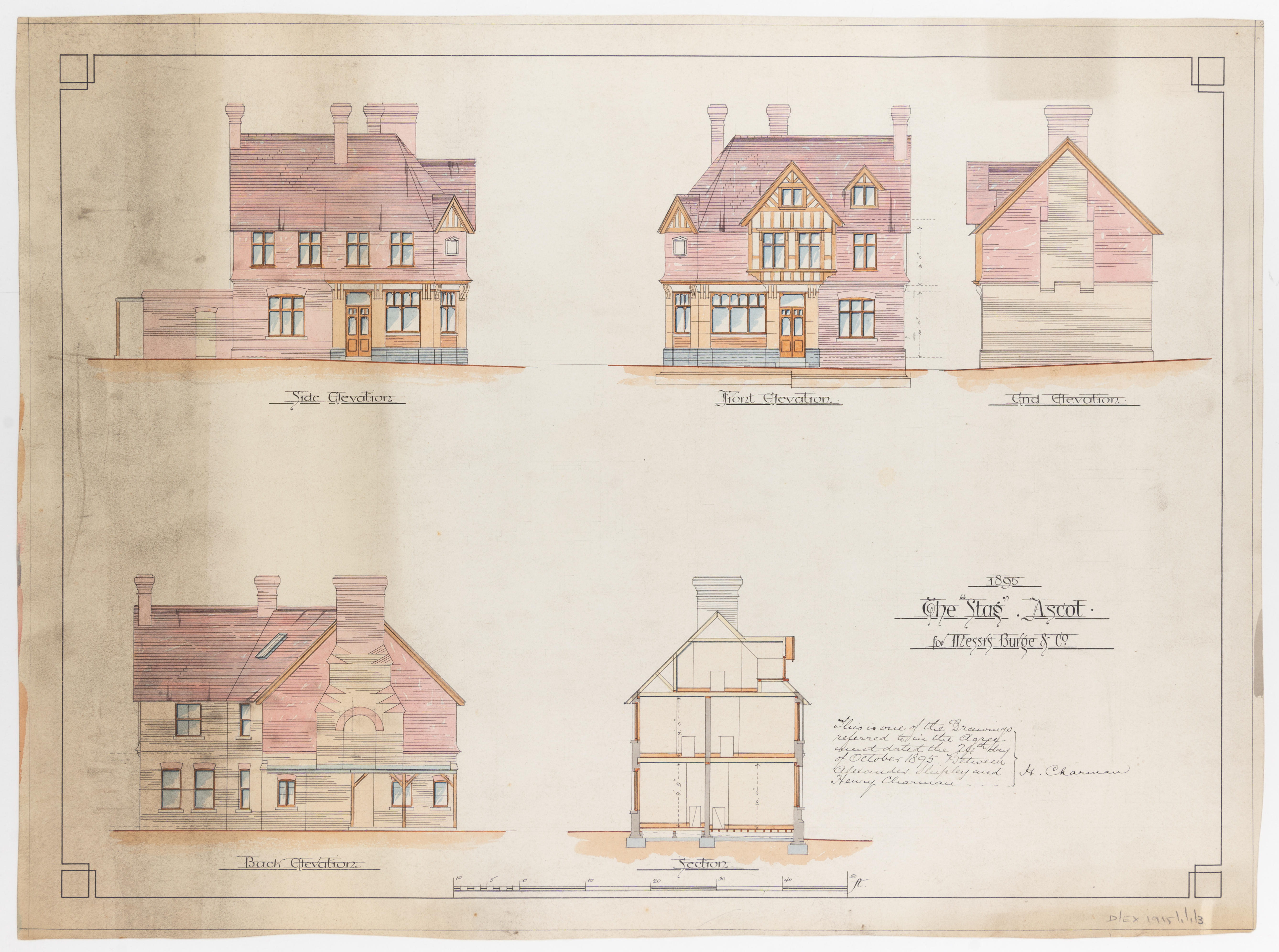
In October 1895, Mr Shipley contracts with Henry Charman to demolish the old Stag beer-house and build the present day Stag Public House as a corner property, adjoining the High Street and cartway to the side. Obviously, Mr Shipman has been persuaded to change his plans. Building plans from the original contract between Mr Shipley and Mr Charman included detailed plans for a large cesspit.
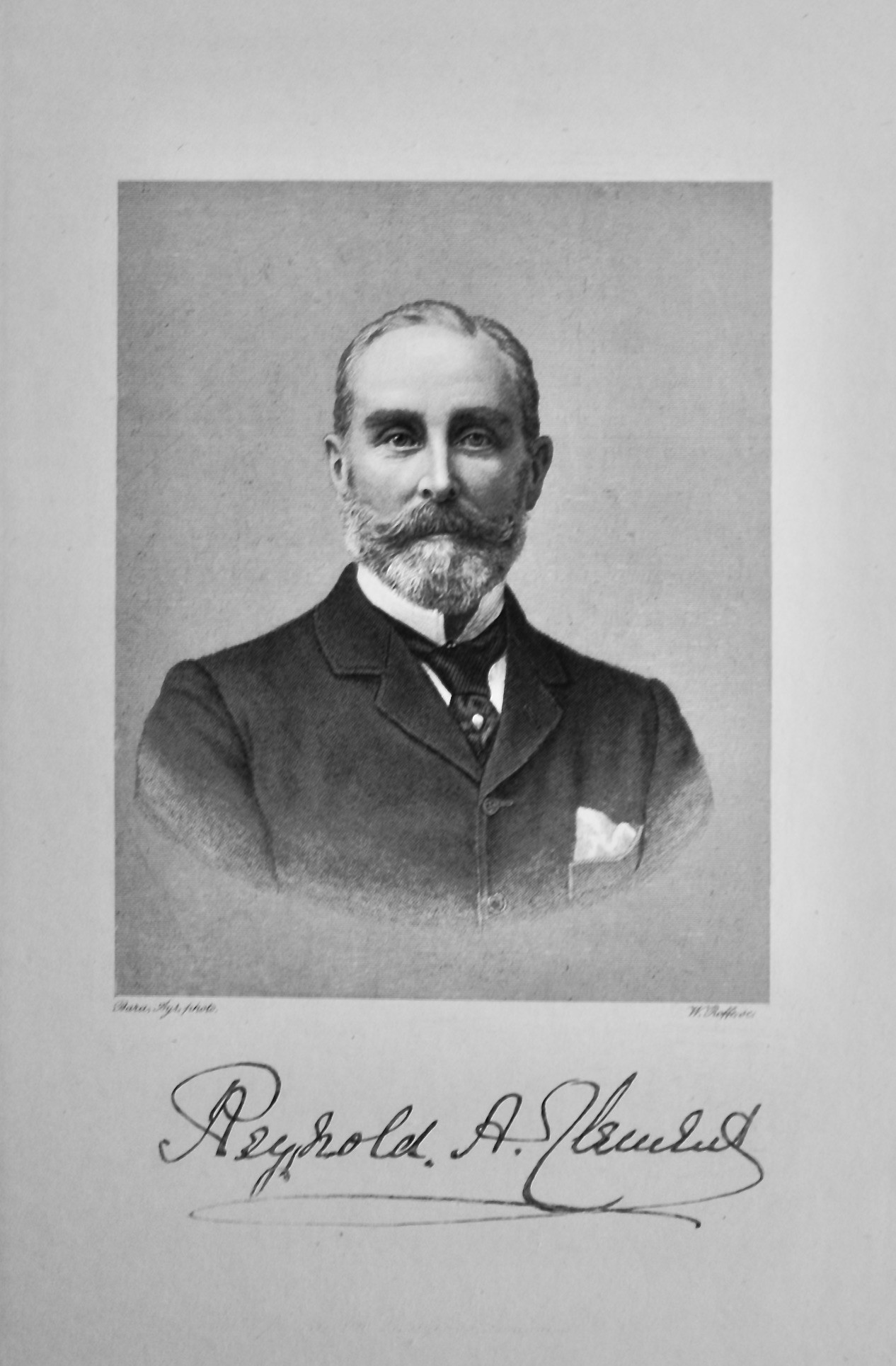
1896. In March of this year Bertie Mason sells the property rented by Henry Charman and the cartway to Reynold Clement, the Clerk of Ascot Racecourse and Captain of the local fire brigade, which was formed as a result of a fatal fire at the Berystede in 1886.
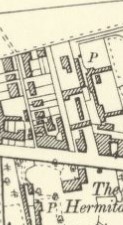
June 1896, and it is announced that; “To enable the booth people to get to the course, a new road of spacious width has been made at a point considerably lower down the main road or High-street, adjoining the “Stag” beer-house which has recently been rebuilt by Messrs. Burge and Co., greatly to the improvement of that part. The new road is fenced on either side, and ends with a gate leading on to the course. The effect of this improvement will be that the booth people will not be in such close proximity to the Grand Stand as heretofore has been the case.” The booth people being the lower classes of the time!
1897. Mr Charman is by now employing a staff of 30, some of whom lived, like his father “Grum” Charman, in Course Road. In February, Mr Charman submits plans for a new house and workshop. In March 1897, Reynold Clement sells the workshops and the Hollies to Henry Charman.
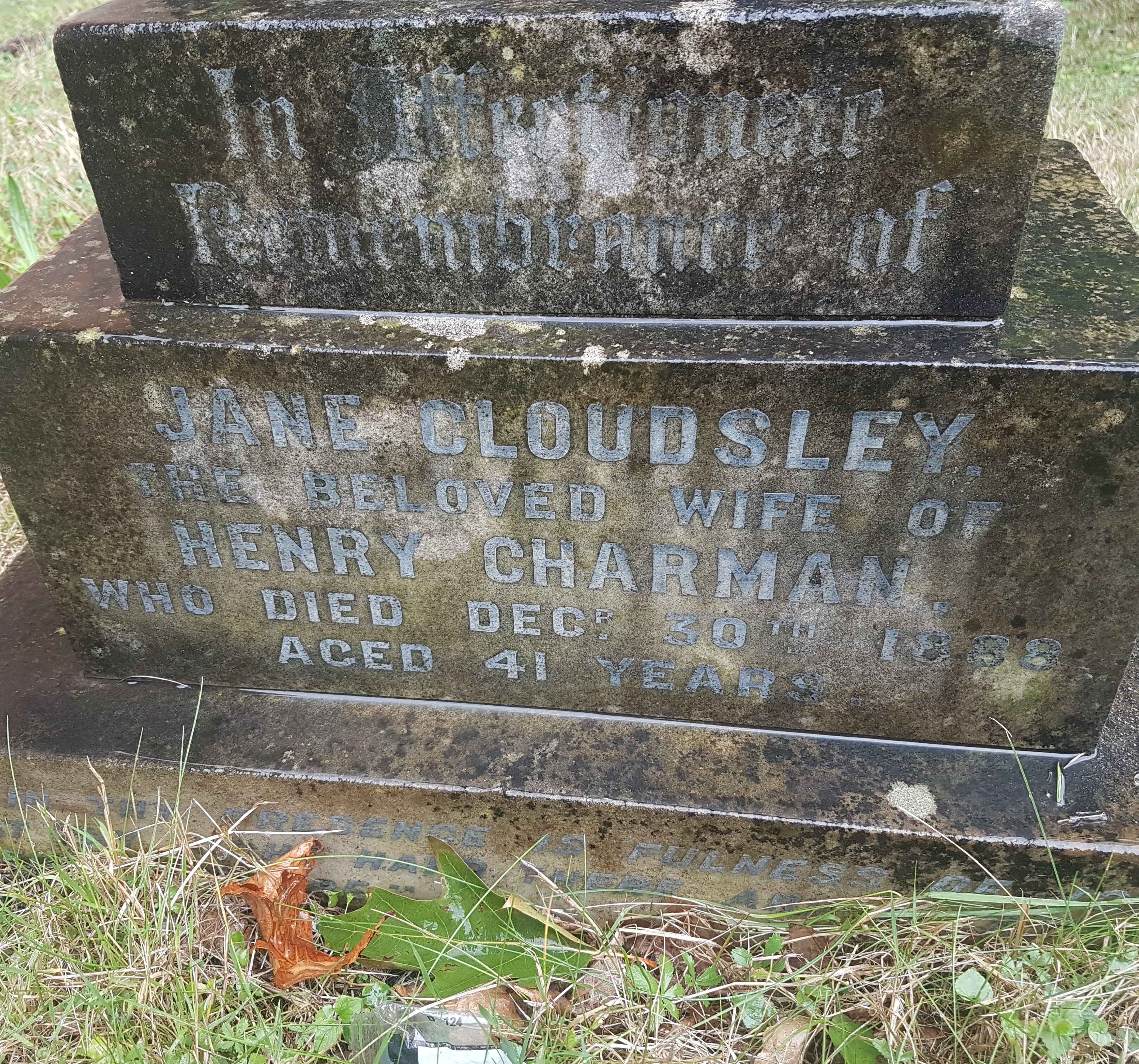
Henry Charman then builds Cloudsley, the house adjoining the rear of the Stag Public House. He names the house Cloudsley after his first wife Jane Cloudsley, nee’ Flicker, who died in 1888. Her grave can be found near the entrance to All Saints Church at the top of the High Street. By now, Henry Charman is a Parish Councillor, Borough Councillor and Chief Fire Officer at the Fire Brigade (Reynold Clement having resigned as Chief Fire Officer in March 1897). He is also a local Enumerator and Mason. Living in the Hollies, which he has recently purchased, Mrs Charman advertises for staff in November, as the Hollies is a substantial house and they have eight children.
1902. With a growing business of almost 40 employees, they have a family of eight children: Harold, Frederick, Henry, Gertrude, Majorie, Herbert, Evelyn and Edith. In November, Henry Charman submits plans to enlarge the Hollies. His son Harold eventually becomes the local Ascot photographer with a studio in the High Street, whilst Frederick worked as an architectural draughtsman and also became a volunteer fireman.
Originally the steam-powered fire pump was kept at the Ascot Hotel. In 1900 it was decided that a more central location for the pump was required and a plot of land was either purchased from, or donated by, Mr Shipley of the Stag Public House for the new Fire Station. The building of the Fire Station was funded by voluntary contributions, and it was to a design drafted by Frederick Charman which was approved at a meeting of the Fire Brigade in July 1902.
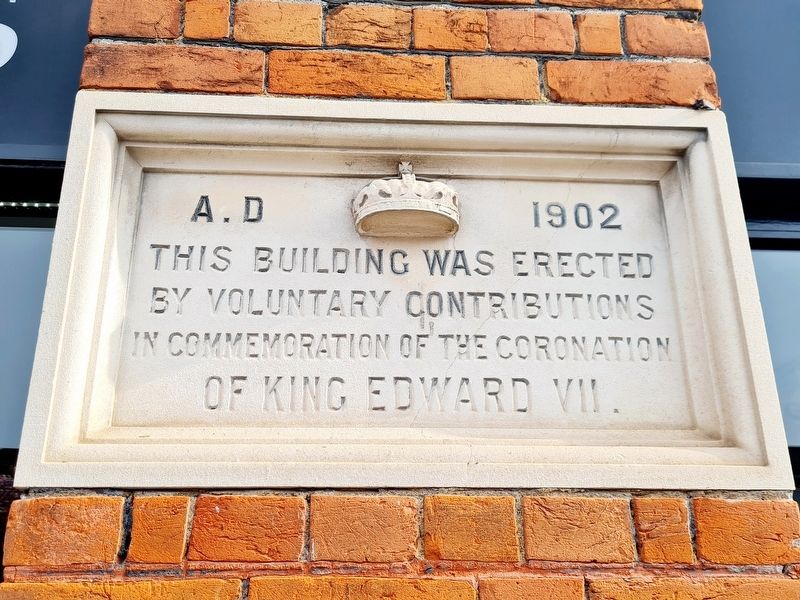
The Fire Station was opened on the 25th March 1903, having possibly been built by Henry Charman. It was funded by local contributions.
1914. The drainage scheme for Ascot, which was first proposed following the fatal poisoning of a resident in Course Road some 20 years previously, is finally started in this year. Drainage engineer Mr Fowler has worked on the project for 16 years without the Council paying him. It is agreed that the scheme would never have come to fruition if it hadn’t been for the unwavering support of the “father” of the Council, Mr Charman. When the mains drainage scheme is finally completed years later, properties in Course Road, Mr Charmans’ workshops, the House Cloudsley and the Stag Public house are all connected to the public sewer that now runs beneath the road created to get the booth people to the racecourse.
1924. Mr Charman continues to live at The Hollies and runs his business from the workshops until 1924 when he sells up and retires to live in Bisley, Surrey. The workshops and Cloudsley are sold to the Thames Valley Traction Company.
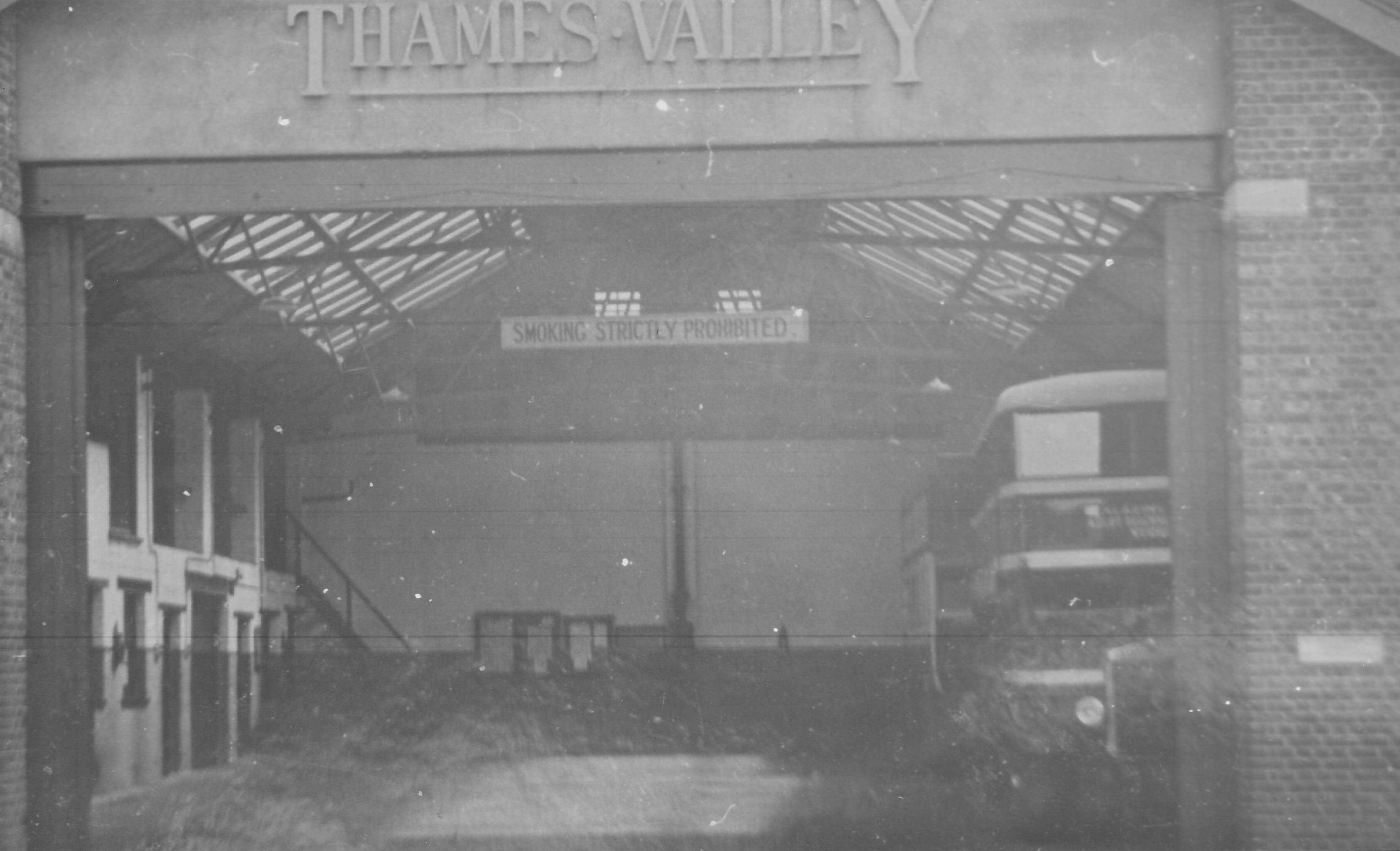
The workshops become the Ascot Bus Garage, and Cloudsley provides accommodation for the foreman’s and inspector’s families, as well being the bus depot enquires office. The Hollies is purchased by a Mr Sawyer who offers it for let during Ascot week for 90 guineas. The property remains a private house until it is purchased in the 1930s by Ascot Racecourse and demolished.
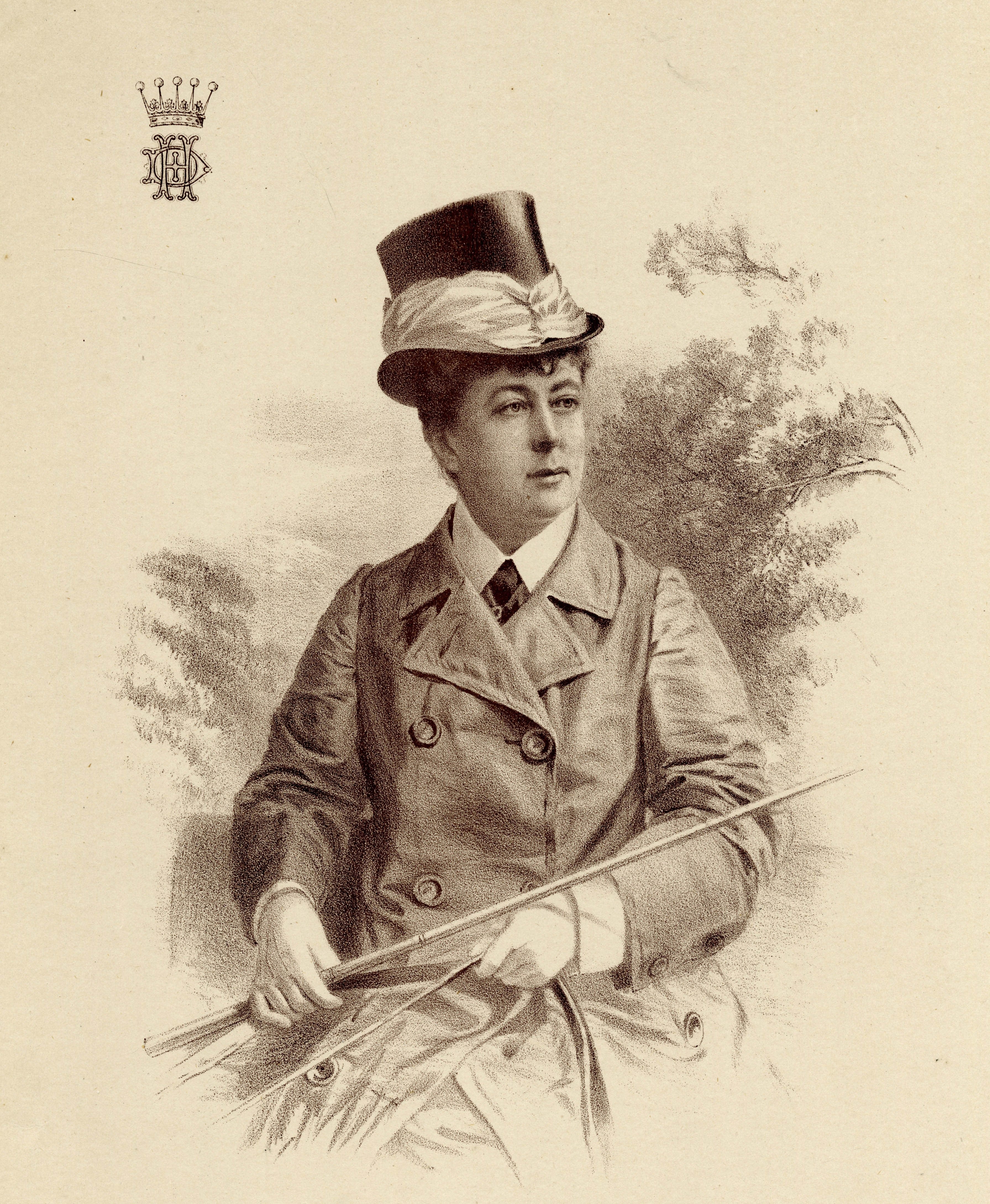
1935. The Grange, long-time residence of Baron and Lady Huddleston was demolished to make way for car parking. Baron Huddleston was one of the main contributors to a fund to establish Ascot Fire Brigade. He died in 1890. His widow, Lady Huddleston, continued to live at The Grange until her death. She had instructed her executors that upon her death £1,000 from the sale of The Grange should be used to provide a drinking fountain in Ascot, in memory of her husband. The Grange was duly sold to a Mr Rendle, but as far as I know no drinking fountain was ever built. Ascot Racecourse purchased The Grange from Mr Rendle in 1935, demolishing it shortly afterwards.
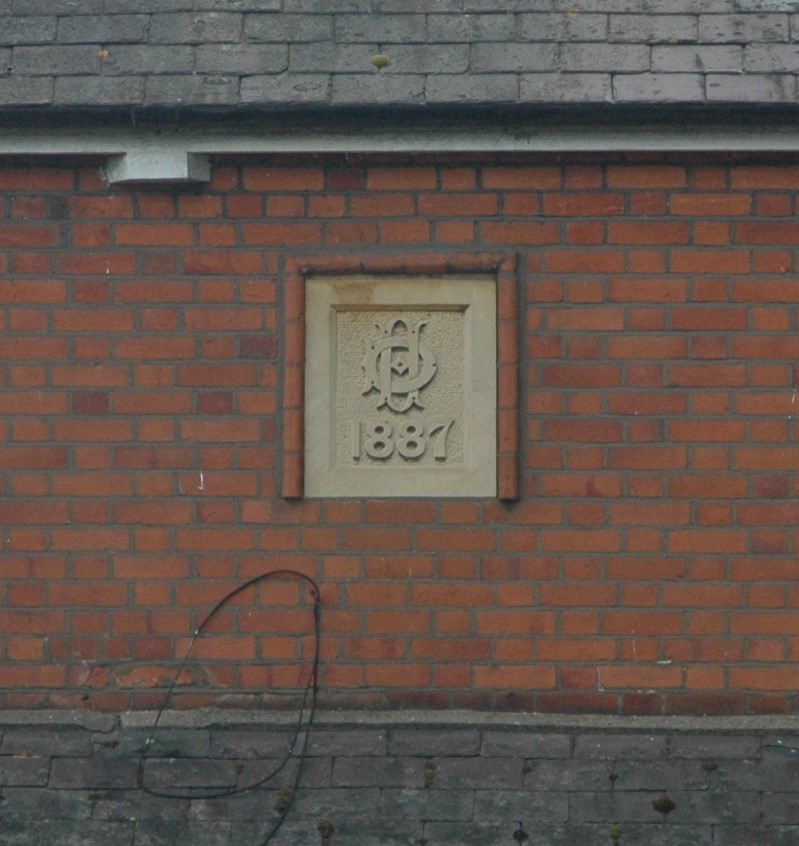
However, the gardeners cottages, built in 1887, were retained and stand to this day. Diana Huddleston’s initials can be seen on the date stone on the front of the cottages.
Click on the image to see a larger version.
1936. Busmen strike at the Thames Valley Traction Company in Ascot in June 1936. They are deadlocked with the company over demands for improved pay and working conditions. (Photo by Derek Berwin/Fox Photos/Getty Images).
Embed from Getty ImagesTo be continued ..
 BK .. This and That