

This sign will be removed when I am satisfied that I have a reasonable version.
I have touched on education in a number of my potted histories, principally in the place histories and the general British histories. The objective here is to build on that information and produce a separate article.
As with all my potted histories, it is aimed at the general reader who might have an interest in the topic, hopefully producing something which is informative, readable and provides some context for events. It does not pretend to be a scholarly work.
It begins with a brief mention of the early civilisations in the Middle East, before covering classical antiquity and eventually concentrating on England.
Use the Contact Me page if you have any questions or feedback.
Contents
- The Sumerians and Ancient Egyptians
- Ancient Greece
- The Romans
- The Dark Ages
- Monastic Expansion
- Early Universities
- Early Scottish Universities
- Early Secular Schools
- Careers in the late Middle Ages
- Effects of the Dissolution of the Monasteries
- The 17th and 18th Centuries
- Petty, Dame, Sunday and Ragged Schools
- The Effects of Religion
- Switch to Types of education
- Elementary and Secondary Education
- 1830s
- Public Schools and the Growth of Independent Schools
- Early Education Acts
- 1944 – 1987
- From 1988
- Opening the Universities
- Technical and Adult Education
- 1820-1870
- 1870 Onwards
- Polytechnics
- Odds and Sods
- Teaching Assistants (TAs)
- Endowments
- Extra-curricular Activities
- Literacy Level Estimates
- Bibliography & Further Reading
- Acknowledgements
- Version History
The Sumerians and Ancient Egyptians
There has obviously always been the need for informal education so that the next generation can assist and eventually take over from us, be it in the confines of the home or the local settlement. Evidence seems to indicate that formal education probably arrived with the Sumerian and Ancient Egyptian civilisations.
They were roughly contemporaneous, arguably starting around the late 4th millennium BCE. They introduced writing systems in the forms of cuneiform script and hieroglyphs. This produced the need for scribes and the requirement to train youngsters in the difficult art of writing to carry on the profession. I say difficult because, for example, there were over a thousand cuneiform characters in the early period.
The resultant needs of religion, administration and business were to be the primary drivers for formal education, archaeological evidence for which has been found in the form of Sumerian clay tablets and Egyptian papyri that show classroom exercises. The first known formal Egyptian school dates from around 2000 BCE in the Middle Kingdom.
However, religion was not a driver in China where formal education began around the 16th century BCE, with the focus on training officials.
Ancient Greece
There was no public education in Athens, meaning that it was limited to the offspring of those parents who could afford to pay for it, and usually further limited to boys, as girls were educated at home, learning domestic skills, seldom having any formal schooling.
Private teachers were employed to educate 7–14-year-old boys in reading, writing, mathematics, poetry, music and physical training. 14–18-year-olds covered advanced literature, rhetoric and public speaking, along with further athletics. This was followed by two years free military training.
With regard to higher education, Socrates is best known to us on account of the portrayals of him that were penned by the likes of Plato, Xenophon and Aristophanes. He did not have a school. He simply engaged in philosophical discussions in open spaces. He did not charge for this, in contrast with the itinerant professors and intellectuals of the time who taught rhetoric, politics and virtue for a fee.
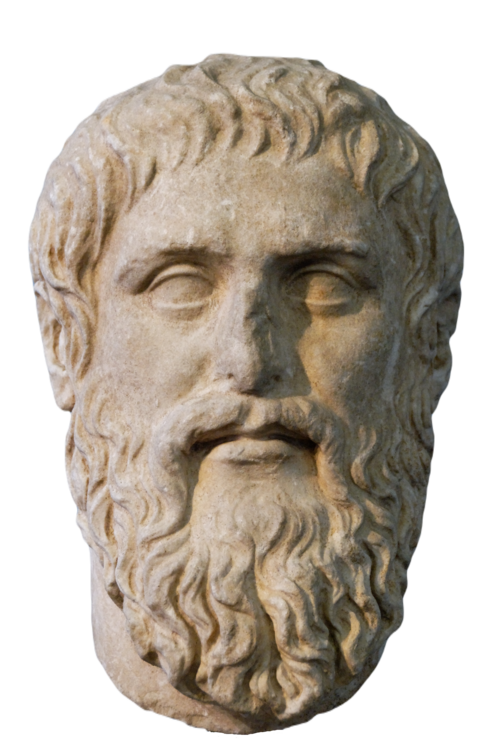
Plato, a follower of Socrates, opened a school around 387 BCE, called the Academy. The objective was to train future philosophers and leaders by exploring truth through reason, and studying politics, ethics and knowledge. It was to last for 900 years, eventually being closed by the Roman emperor Justinian in 529 CE.
50 years after the Academy was founded, Aristotle established the Lyceum around 335 BCE. It had a scientific and practical approach to learning, covering a wide range of subjects including biology, zoology, logic, politics, ethics, rhetoric and physics.
The Academy and the Lyceum were attended by a small educated elite, but their teaching was to provide the model for future higher education across the western world.
The Romans
Their education system was heavily influenced by Greek culture, albeit it was driven more by the concepts of practical public service rather than abstract philosophy. Once again, there was only private education.
By age:
- Literator (7-12- year-olds) concentrated on basic reading, writing and arithmetic
- Grammaticus (12+) covered Greek and Roman literature, geography, history, poetry and moral lessons
- Rhetor (higher education) focused on public speaking, persuasion, law, philosophy and debate.
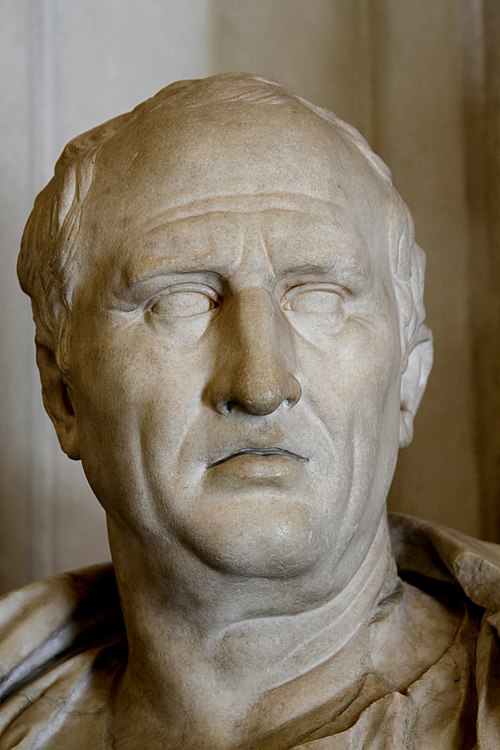
Cicero, the renowned lawyer, politician, orator and writer, provides an early and fairly isolated example of a perennial student, travelling to Greece and Rhodes in his twenties for further advanced studies in philosophy and rhetoric. He was not completely done with education until he was 29!
Any figures on literacy levels across the Roman Empire must perforce be guestimates. 10-20% is sometimes quoted. It seems obvious that figures would have been higher in Rome and Italy than in the outer reaches of the empire; and higher in urban centres such as Londinium, Eboracum (York) and Verulamium (St. Albans) than in rural parts. The handwritten tablets which have been discovered at Vindolanda, the Roman fort just south of Hadrian’s Wall, indicate that officers, and quite possibly their wives, were literate.
The Roman Empire was split into two at the end of the 4th century CE. The Western side was left to try to deal with encroaching barbarian tribes, a task which it ultimately failed to do. The Romans were forced to leave Britain in 410 CE when the Visigoths sacked Rome. Further intrusions resulted in the end of the Western Roman Empire in 476 CE when Odoacer, a Germanic soldier, deposed the child emperor Romulus Augustulus, and made himself king of Italy.
The Eastern Roman Empire was based in Constantinople (modern day Istanbul) and it continued to exist until 1453 CE, although it is more usually known as the Byzantine Empire. Greek speaking, its scholars were responsible for ensuring that copies of classic works were maintained.
The Dark Ages
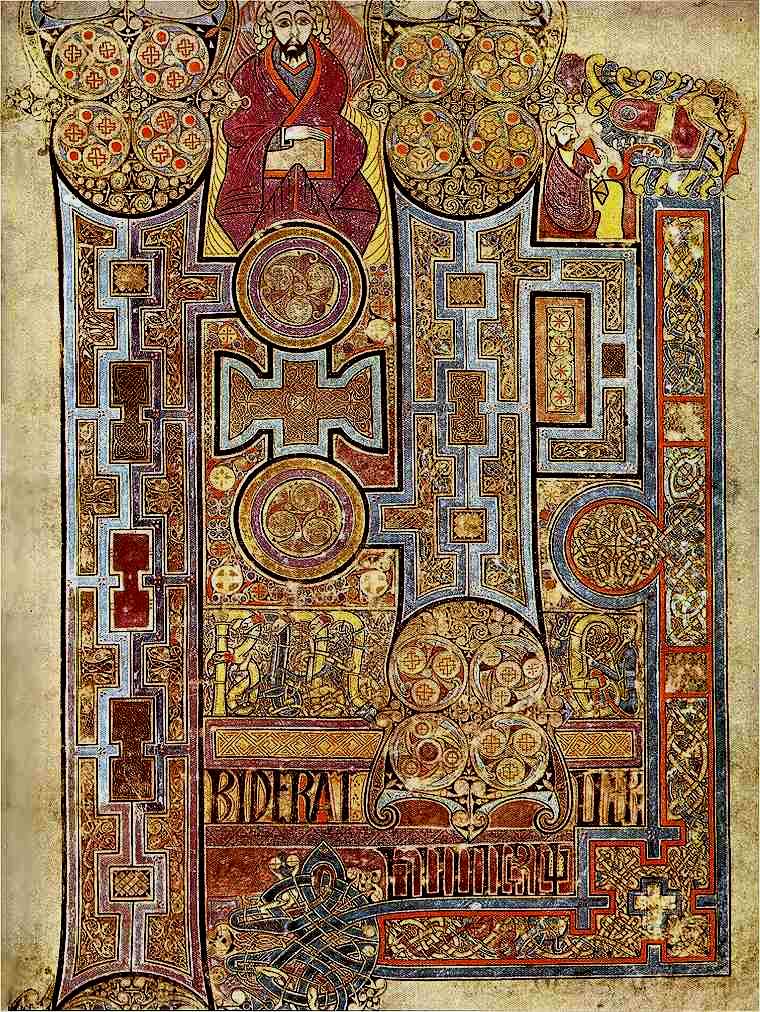
A term generally deplored by historians, this covers the period from (say) 500 CE to 1000 CE. It signifies the vacuum that resulted from the fall of the Western Roman Empire, and which led to political fragmentation, intellectual stagnation and a decline in trade.
Literacy, and education in general, were slowly rescued by the Christian Church, which was itself somewhat fragmented at the time. Monasticism had reached Ireland, which had not been part of the Roman Empire, around the 5th and 6th centuries, Clonmacnoise and Clonard being particularly noteworthy monasteries. The work of these Celtic monks included the production and copying of manuscripts and the teaching of novices. The 9th century Book of Kells is undoubtedly their most famous manuscript.
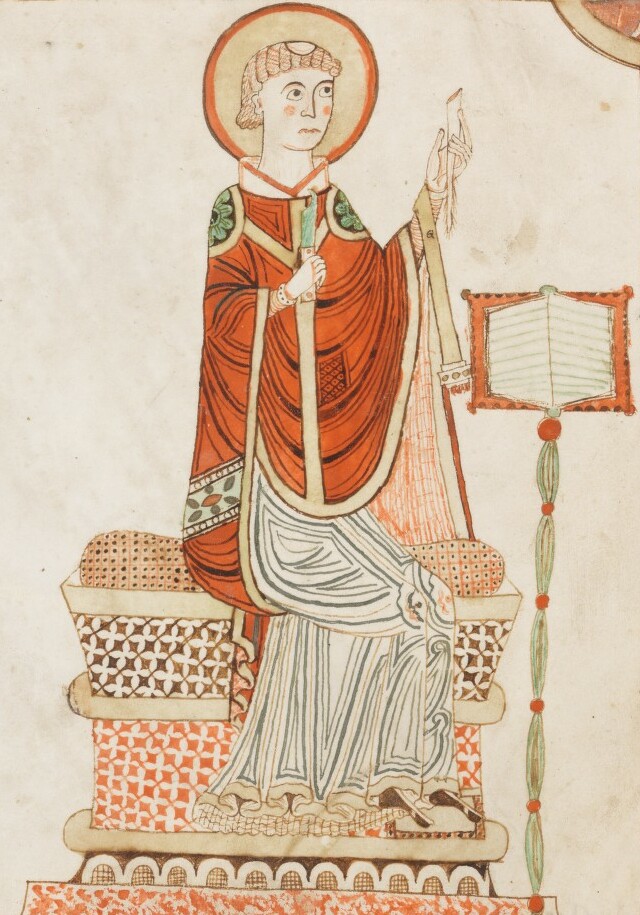
Columba, reputedly exiled from Clonard after a dispute, went on to found the abbey at Iona on the Hebrides. Oswald, an early 7th century ruler of Northumbria, had spent most of his childhood in Dál Riata where he converted to Christianity. He subsequently asked Iona to convert Northumbria. Aidan arrived and founded Lindisfarne monastery in 634 CE, subsequently noted for producing the Lindisfarne Gospels in the 8th century. Monkwearmouth and Jarrow followed, initially established in 674 CE. It became a centre of learning, best known for the Venerable Bede, the monk and author of The Ecclesiastical History of the English People which earned him the title of the father of English History.
Apart from monasteries, cathedral schools were also places of learning, principally of Latin grammar, theology, rhetoric and logic, as well as the training of choristers. York Cathedral School was established in 627 CE. Under Archbishop Ecgbert in the 8th century, it taught the sons of nobles, as well as the cathedral clergy.
While the Celtic monks were active in the north, Roman-led Christianity had arrived in the south of England with Augustine who had been sent by Pope Gregory I in 597 CE to convert the Anglo-Saxons. He set up a cathedral in Canterbury which included a school. Other schools which were founded in the south in the following century included Winchester (648 CE), Hexham (678 CE) and Malmesbury (709 CE).
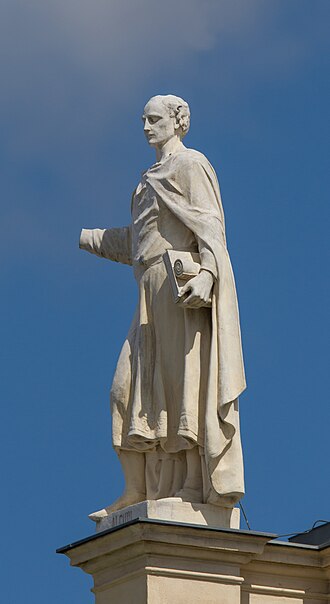
Back in York, Alcuin was the most famous pupil in the late 8th century, eventually becoming its headmaster, and extending the curriculum. It taught grammar, rhetoric, law, poetry, astronomy, natural history, arithmetic, geometry, music, and the Scriptures.
He was subsequently recruited by Charlemagne, the future Holy Roman Emperor, and became one of the leading intellectual architects of the Carolingian Renaissance, the first of three medieval renaissances that contemplated an intellectual revival, using the classical Greek and Roman cultures as their model.
Monastic Expansion
Reforms around the 10th and 11th centuries led to the founding of various new monastic orders in Europe, including the Cluniacs, Cistercians, Carthusians and Augustinian Canons Regular. All eventually arrived in Britain, leading to a period of rapid expansion in the number of both monasteries and abbeys until the time of the Black Death in the 14th century. In turn, this led to an increase in the number of teaching establishments, which is not to say that absolutely every institution offered teaching.
Early Universities
It is important to realise that universities did not come perfectly formed. They generally started life as schools. In fact, the term “university” did not come into existence in English until c. 1300, according to one etymological source.
The seven liberal arts – comprising the trivium (grammar, logic, rhetoric) and quadrivium (arithmetic, geometry, music, astronomy) – originated in classical antiquity as foundational education. They were codified in the 5th and 6th centuries by Martianus Capella and Boethius, both Romans, and they became the core medieval university curriculum, designed to cultivate a well-rounded, rational mind.
Some students went on to study law, medicine or theology. Science was notably missing, a situation which existed in European universities for a number of centuries, only appearing in some establishments in the 17th century. It was the Islamic world where the study of science had been evident from the 8th century, and which blossomed through to the 13th century.
Early on, Bologna and Paris were the great centres of learning in Europe. Bologna’s founding date is put at 1088. It consisted of a community of students and teachers, although it was administered by the Church. It developed an international reputation for the teaching of civil law and canon law, based on the codification of Roman Law which had been ordered by the Byzantine Emperor Justinian.
The school at Paris was founded c.1150, specialising in theology and attracting students who would go on to be clerks and administrators, as well as those who were destined for the Church.
There is evidence of some early teaching in Oxford from 1096, increasing from 1167 when Henry II temporarily banned students from going to Paris during his spat with Thomas Becket who was in exile in France at the time under the protection of King Louis VII.
Closely tied to the Church, it trained lawyers, administrators and teachers, as well as clergy. Beyond the core teaching, some students progressed to the higher faculties of theology, canon law, civil law and medicine.
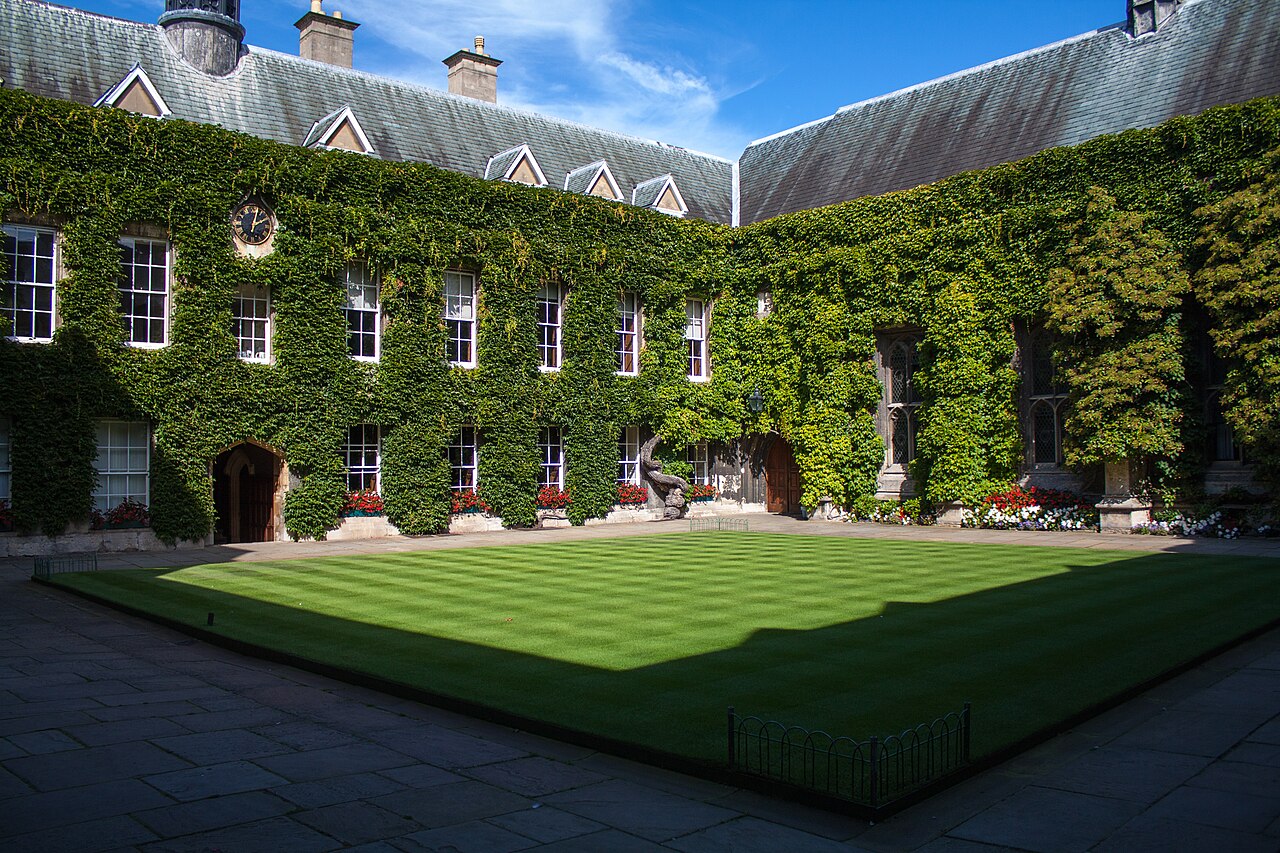
Its endowed college system began in the 13th century: University College (1249), Balliol (c. 1263) and Merton (1264) being the oldest surviving establishments.
There were periodic tensions between town-and-gown in Oxford, and after a major crisis in 1209, some students went off and helped to form Cambridge. Initially, it had a similar model to Oxford, its first college being Peterhouse which was founded in 1284.
Early Scottish Universities
Oxford and Cambridge were to remain the only English universities until the 19th century. However, Scotland was more active in this area, viz. St Andrews (1413), Glasgow (1451), King’s College Aberdeen (1495), Edinburgh (1583) and Marischal College Aberdeen (1593).
Early Secular Schools
It is estimated that there had been 30+ schools in the Norman period, and that Latin was the primary subject, typically being taught by a parish priest or other cleric.
Few monasteries were founded after 1300, leading to the establishment of more secular schools to fill the gap in the provision of education. They were still Church-based, and their primary aim was typically to train individuals for the priesthood. Over one hundred were founded before the Dissolution of the Monasteries in the late 1530s, including Arundel (1380), Winchester (1382), Ipswich (1399), Fotheringhay (1430), Eton (1440), Magdalen College School, Oxford (1480), St. Paul’s London (1509) and Manchester Grammar School (1515). Grammar school (scolae grammaticales) indicated that the primary purpose was to teach Latin Grammar. It was a term that came into wider use from the 14th century.
Careers in the late Middle Ages
The Church offered a career for those sons who were not likely to inherit the estates of their fathers. This may have been a contributory factor towards the moral decline in monasteries and other religious orders, as some clerics may not have had much of a spiritual calling.
Outside the Church, a general education was a prerequisite for statesmen and careers as lawyers, civil servants and clerks. It is not surprising to find that the vast majority of the Lord Chancellors of England were senior churchmen right through to Cardinal Wolsey in 1529. In addition, clerks in the Royal Chancery were mostly churchmen in minor orders, holding office but not acting as priests, that is they did not administer the sacraments. This continued to be the norm until at least the middle of the 15th century.
Effects of the Dissolution of the Monasteries
Thomas Cromwell, chief minister to Henry VIII, engineered this project in the late 1530s and early 1540s so that the enormous wealth of these institutions would accrue to the Crown.
Health, almost totally provided by monastic orders, and education were immediately affected. Monastic schools disappeared virtually overnight and charitable giving to endow other schools was significantly reduced.
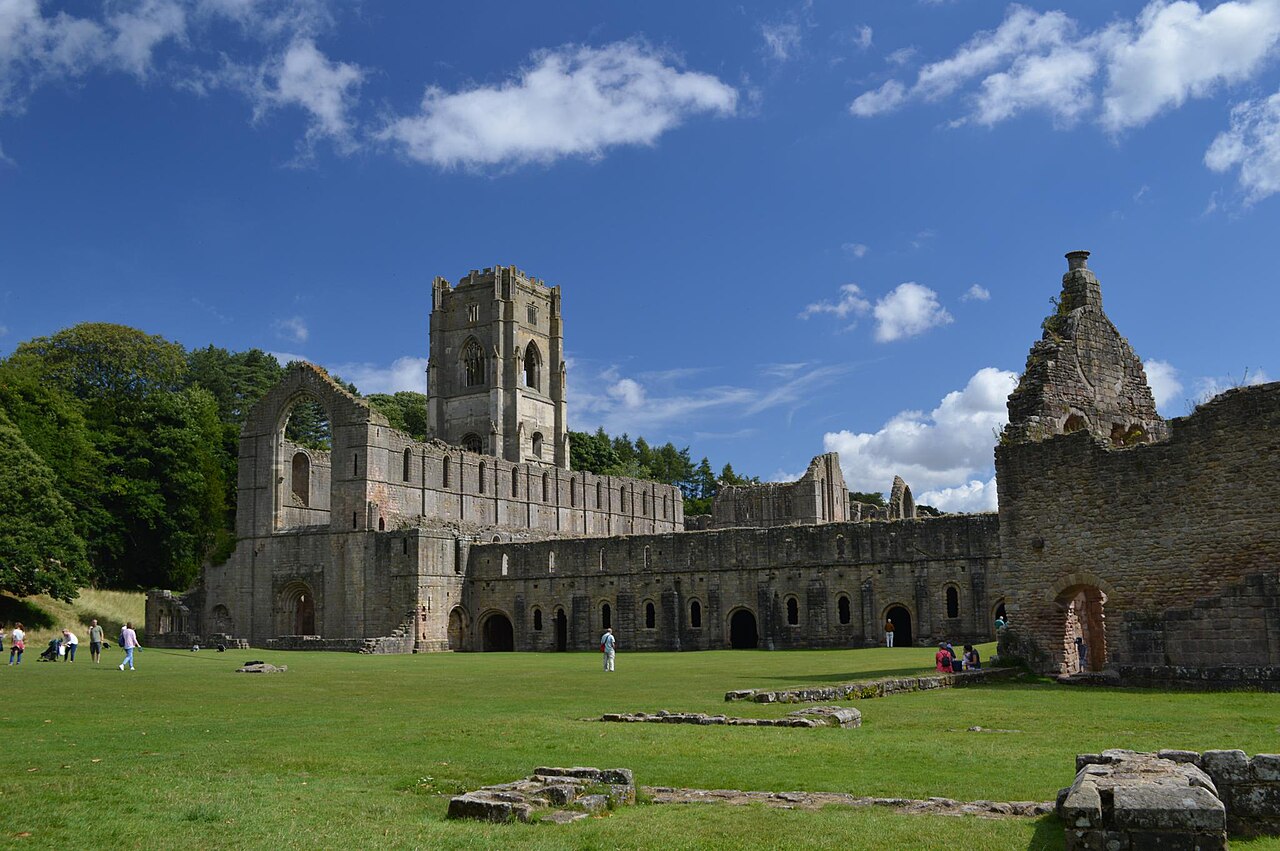
Fortunately, the picture in education was not totally black. Some re-founding quickly got underway. For example, monastic orders had run six Oxbridge colleges, a couple of which were re-founded: Buckingham College became Magdalene College, Cambridge; and Trinity College, Oxford was built on the site that had been occupied by Durham College. However, it is estimated that it was to be the 1580s before the recovery had made significant progress. The number of grammar schools eventually expanded substantially, principally through merchant and philanthropic endowments.
The 17th and 18th Centuries
The Protestant religion was the primary influence behind education in this period. Oxbridge colleges were heavily connected to the Church of England, leading to criticism in the 18th century that their teaching was overly traditional and failed to keep up with the Enlightenment thinking that could be found in Scotland and on the Continent. In addition, they were doing little to aid the expanding British economy.
Non-Conformists such as Presbyterians, Congregationalists and Baptists emerged after the Act of Uniformity in 1662 and the Act of Toleration in 1689. They were effectively banned from Oxbridge, and so they began to set up dissenting academies in various parts of the country, notably in London, Lancashire, Devon and Wales. They often taught a broader curriculum than the old grammar-school-and-university route, including modern languages, philosophy, science, and practical subjects alongside theology.
Charity schools, described as elementary schools to educate the poor, were notable in the early 18th century. Bluecoat schools were charity schools, the blue uniform indicating charity status. In Liverpool, Bryan Blundell, master mariner and part-owner of a vessel, in conjunction with the Reverend Robert Stythe, set up Bluecoat, a day school for 50 destitute orphans in 1708. Blundell then effectively became a full-time philanthropist for Bluecoat. The building was constructed in School Lane in 1719. It still exists, now known as the Bluecoat Arts Centre. Westminster also had a Bluecoat school, the building in Caxton Street being founded in 1709.
Petty, Dame, Sunday and Ragged Schools
Petty schools, early elementary schools dating from the 16th and 17th centuries, were aimed at young boys who were intending to go on to grammar school, and they concentrated on basic literacy skills. Classes may well have been held in the homes of middle-class parents.
Dame schools started in the 17th century and continued through to the 19th. They were typically run by housewives and widows to teach reading, and possibly writing, to the children of lower-income parents. They may also have taught domestic skills to girls.
Sunday Schools began to appear in the 1780s. Their purpose was to teach children to read (the Bible), although adults could also attend. It is claimed that 1.25 million were attending by 1831. Initially, they were cross-denominational, but individual faiths gradually began to establish their own schools.
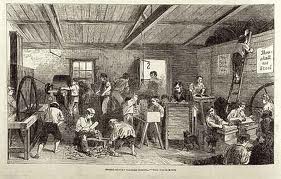
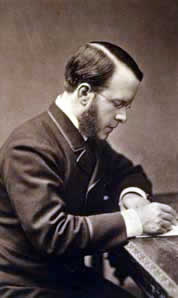
Finally, Ragged Schools provided free education to impoverished children who were probably considered too disreputable to attend Sunday School. Funded by philanthropists, they often operated in makeshift locations such as lofts, stables and even under railway arches. Examples include:
- Thomas Cranfield established such a school near London Bridge in 1798
- Quintin Hogg, a successful merchant and philanthropist, set up a ragged school in York Place, off the Strand in London, in 1864
- while Dr Barnado set up his school in Tower Hamlets in 1877.
Charles Dickens was a supporter of these schools, making donations on a number of occasions. It is claimed that the state of poor children in them was an inspiration for A Christmas Carol.
It is estimated that 300,000 children went through ragged schools in the period between 1844 and 1881. They were formally abolished in 1902.
The Effects of Religion
Apart from a relatively short uneasy period during the reign of James II, Catholicism was suppressed from the Elizabethan period through to the late 18th century, with the first Catholic school reappearing in England in 1791.
Non-Conformists fared slightly better than Catholics, in that they were tolerated. Their first elementary school is thought to have been Joseph Lancaster’s which appeared in Southwark in 1798. Otherwise, the Church of England effectively controlled education until the early 19th century.
It is probable that all religions began to understand that the general direction of travel would be towards greater toleration of faiths other than the Church of England, especially with respect to careers in politics and government which had previously only been open to members of the Church of England. The Catholic Emancipation Act of 1829 was to prove this.
To prepare for these upcoming changes, National Schools were established from 1811 onwards by the National Society for Promoting Religious Education (founded in 1809) to teach the poor, based on Church of England principles. These schools were closely linked with local parish churches.
Similarly, the Society for Promoting the Lancasterian System for the Education of the Poor had been founded in 1808, constituting the beginning of the organised non-conformist elementary school system.
Both organisations began to use the monitorial system, which effectively used older pupils to help teach younger ones.
Catholics had no central organisation for education in the UK at this time, and various religious orders became responsible for setting up schools during the 19th century; notably the Jesuits, the Irish Christian Brothers, the Sisters of Mercy and the Ursulines.
Switch to Types of education
The field of education became a significantly more complex subject from around the start of the Victorian era, and it is considered that continuing to approach it in a simple chronological fashion will overly complicate this article. Therefore, a switch is being made to address the subject by topic, viz:
- Elementary and secondary education
- Academic higher education
- Technical and Adult education.
Elementary and Secondary Education
1830s
The first signs of government involvement in education occurred in the 1830s when it began to make grants available for school building, and it also started to institute early forms of supervision and inspection.
Public Schools and the Growth of Independent Schools
The Clarendon Commission was established in 1861 to investigate the existing elite schools, aiming to improve administration and reduce long-standing abuses. It resulted in the Public Schools Act 1868 that reformed the governance of seven major English public schools: Charterhouse, Eton, Harrow, Rugby, Shrewsbury, Westminster, and Winchester.
The success of the British economy on the back of the Industrial Revolution had led to the rise of the middle-classes and with it a demand for quality fee-paying schools in the later 19th century. Boarding schools tended to be in southern England, often clustered in London’s suburban belt, the Home Counties and in resort towns such as Brighton and Cheltenham.
Provisions for girls’ education made significant progress around this time. Apart from the obvious elite examples of Cheltenham Ladies College (1853/1854) and Roedean (1885), there were a small but growing number of boarding schools, including St. Mary’s and Heathfield in Ascot. However, perhaps the most notable event of the period was the formation of the Girls’ Public Day School Company in 1872 to provide good, comparatively affordable day schools for girls. Notable examples included North London Collegiate School (actually founded in 1850), Oxford High School (1875) and South Hampstead High School (1876).
Early Education Acts
The main purpose of the Education Act of 1870 was to create a framework which catered for the setting up of school boards in areas where there were insufficient voluntary schools. It was followed by a series of further acts over the next 30 years which built on this basic structure.
In 1880, education was made compulsory for 5–10-year-olds, a figure which was to be gradually extended, reaching 14 by 1918 and 15 in 1936, although this latter age was not actually implemented until after World War II.
Elementary education was not defined as “free” until 1891 when the government allocated ten shillings per pupil per year.
And finally in this period, school boards were abolished in 1902 and replaced by Local Education Authorities (LEAs).
1944 – 1987
The education system then remained largely static until the 1944 Butler Act, which built the modern school system, recognising primary, secondary and further education. Secondary education principally consisted of direct grant grammar, secondary modern and technical schools, although there were not to be many technical schools.
The 11-plus examination was introduced to decide which path a child was able to pursue, a methodology which became controversial, resulting in the government asking local authorities to reorganise education along comprehensive lines from 1965, a request that was to be implemented in a somewhat haphazard manner.
General Certificates of Education (GCEs) at Ordinary and Advanced level were implemented in 1951 in England and Wales, replacing the School Certificate and Higher School Certificate which had been introduced back in 1919.
From 1988
The Education Reform Act 1988 is principally known for: introducing the National Curriculum, providing a focus on school performance and offering greater school financial control. The General Certificate of Secondary Education (GCSE) replaced the GCE O Level at this time.
New Labour won the 1997 General Election and quickly introduced The School Standards and Framework Act 1998 which changed how schools were organised and introduced an admittance framework.
From 2000, education law mostly focused on:
- post-16 skills and training
- school organisation and accountability
- academies and reduced local authority control
- special educational needs and disabilities (SEND) reform.
Opening the Universities
Before the 1820s there were only Oxbridge colleges in England, and they all conformed to the Anglican model, that is their role was to train Anglican clergy and educate the Anglican elite.
What was to become known as University College, London (UCL) was established on Gower Street in 1826 by groups of what might be called non-establishment figures. While Oxford and Cambridge had only accepted members of the Church of England, this college was secular.
However, it was unable to award degrees, and it was somewhat predictably derided in the Tory / Anglican press, who called it the “Cockney College”. Nonetheless, it did have the effect of encouraging Tories and the Church of England to found their own institution in the capital, King’s College (1829), which was sited next to Somerset House on the Strand. Meanwhile, Durham University was established in 1832 on the Anglican model
In 1836, the Government chartered an examining body, the University of London, with the power to award degrees to candidates from UCL, Kings and other affiliated institutions. The Senate, consisting of 38 distinguished men, was appointed to conduct examinations and determine the syllabus. By the 1850s, it was conducting examinations for 100 schools and colleges all over Britain.
Other colleges gradually became part of the University of London, including: Bedford College (1849), the first all-women’s college, which joined the University in 1900; the London School of Economics (LSE) which was founded in 1895 and joined the University in 1900; the Goldsmiths company which founded a college at New Cross, primarily for teacher training, became part of the University in 1904; and Imperial College (1907) which concentrated on the sciences.
In England, women first gained formal access to university education in 1868 at the University of London, and the first English university to award degrees to women did so in 1878; Oxford eventually followed in 1920 and Cambridge in 1948.
Outside London, Victoria was established from 1880 and the University of Wales in 1893. They were both in fact federal universities: Victoria comprised colleges in Manchester, Leeds and Liverpool, all of which went on to become universities in their own right in the early 20th century; while Wales consisted of Cardiff, Bangor and Aberystwyth.
Other universities which appeared in industrial cities around the turn of the century, commonly known as red brick universities, included Bristol and Sheffield.
The next tranche of universities, often called the “plate glass” universities, arrived in the 1960s, and included Sussex, York, Warwick, East Anglia, Essex, Kent, and Lancaster. These were designed for a mass higher-education era and often used newer interdisciplinary teaching structures.
Finally, polytechnics such as Westminster, Oxford Brookes, Nottingham Trent, Sheffield Hallam, Kingston, Coventry, and many others were awarded university status in 1991.
Technical and Adult Education
The arrival of the Industrial Revolution meant that “on the job” training was no longer sufficient.
1820-1870
Mechanics’ Institutes began to appear around Britain in the 1820s, providing a means of educating adult members of the working-class, principally in technical subjects. The London Mechanics Institute was formed in 1823, accepting its first female students in 1830. It gradually morphed into an organisation which provided part-time education for adults, covering a wide range of subjects. It was renamed Birkbeck College in 1903 and became part of the University of London in 1920. Other early institutes included Liverpool in 1825 and Wolverhampton in 1835.
Regent Street Polytechnic in London appeared in 1838, primarily to introduce new technologies. In addition, the Working Men’s College (London) emerged in 1854 with a wider curriculum. It was established by a group of Christian socialists to provide a liberal education for artisans. Initially housed in Red Lion Square, it moved to Great Ormond Street in 1857.
1870 Onwards
In 1880, Quintin Hogg, the philanthropic sugar merchant, took over the now failed Regent Street Polytechnic, and opened it for evening study. It had 7,000 students in its first year, a figure which had doubled by the end of the century.
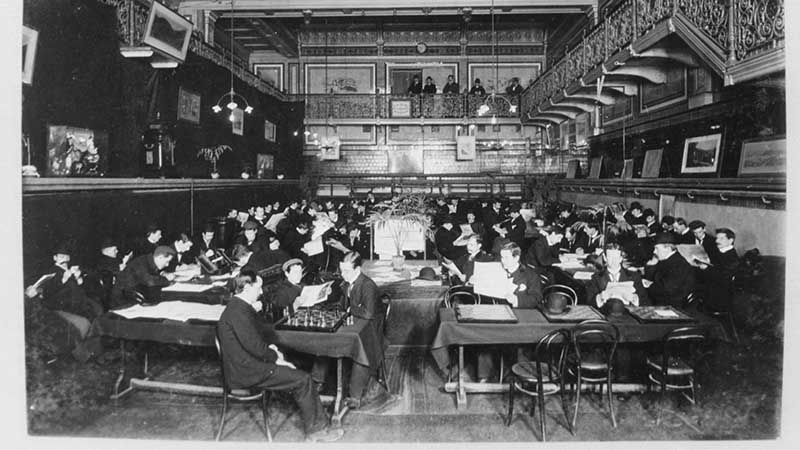
In the early 1880s, the City of London Guilds were persuaded to spend some of their wealth on technical training, founding the City and Guilds Institute of London and Finsbury Technical College. And in 1888, the Drapers’ company took over the funding and control of the People’s Palace, turning it into the East London Technical College on the Mile End Road.
Despite the arrival of these various colleges, it was becoming apparent during the second Industrial Revolution, also called the Technology Revolution which started around 1870, that Britain was lagging behind countries such as Germany and France in the field of technical education.
Towards the end of the 19th century when there was apprehension that Britain’s supreme position in world trade might be under threat, the Technical Instruction Act (1889) allowed local authorities to levy one penny tax to fund technical education. In the following year, the Local Taxation (Customs and Excise) Act 1890 diverted ‘whisky money’ from publicans to local authorities for assisting technical education or relieving rates, boosting investment in technical instruction.
Polytechnics
Polytechnics were created in the 1960s as a major part of the postwar expansion of higher education. Their roots, however, go further back: many grew out of technical colleges, colleges of commerce, art schools, and mechanics’ institutes that had developed in the 19th and early 20th centuries to support industrial, scientific, and vocational education. What changed in the 1960s was that government reorganised many of these institutions into a distinct higher-education sector.
Odds and Sods
Teaching Assistants (TAs)
Andrew Bell and Joseph Lancaster each independently developed the monitorial system in the early 19th century. In essence, it used abler, usually older, pupils, to teach younger or less able pupils. Bell called his system Madras.
The National Society for Promoting Religious Education used Bell’s system, although it based it on the teachings of the Church of England. Meanwhile, Lancaster’s version was adapted by non-conformist schools.
Moving forward to the 1960s, teaching assistants began to appear in significant numbers. They were typically called aides or helpers at the time, providing basic support to teachers and pupils. In the late 1990s, TAs moved beyond purely clerical help and became more involved in supporting learning, especially in primary classrooms and with pupils with special educational needs.
In recent years, the history of TAs in the UK has really become the history of a workforce balancing two identities: support staff who ease teacher workload, and paraprofessionals who directly shape pupil learning.
Endowments
Educational endowments are funds or property donated to support education over the long term, usually by generating ongoing income for things like scholarships, teaching, research, or school and university operations.
They have existed in various forms since ancient times. Wealthy Greeks and Romans could fund schools and teaching as a means of acquiring civic pride, while Roman emperors sometimes funded teaching, as when Vespasian created publicly paid chairs of rhetoric at Rome.
In the Middle Ages, Oxbridge colleges were often founded through specific endowments intended to house and maintain scholars or masters, being frequently set up with land, rents, or other assets whose income would sustain education over time. This marked a major shift from civic benefaction to the legally structured educational foundation.
Moving towards the early modern period, endowments began to support not only students but also chaplains, tutors, professorships, libraries, and buildings. Over time, these funds helped transform education from an occasional beneficiary of patronage into an institutionally durable system.
In practice, modern endowments may fund scholarships, professorships, research centres, libraries, outreach, maintenance, or general operating needs.
Extra-curricular Activities
While there are many activities which sit outside the basic syllabus, I will limit myself here to mentioning just two, football and drama.
Football
Students who went to training colleges in the 1870s became teachers in the new elementary schools. St. John’s in Battersea, St. Mark’s in Chelsea and St. Peter’s in Birmingham were teacher training colleges where students could find football, a relatively new sport at the time. These teachers were subsequently instrumental in helping to spread football locally. They played the game themselves, forming teams such as Middlesborough Pupil Teachers FC and Sunderland and District Teachers’ Association FC, the latter eventually becoming Sunderland FC.
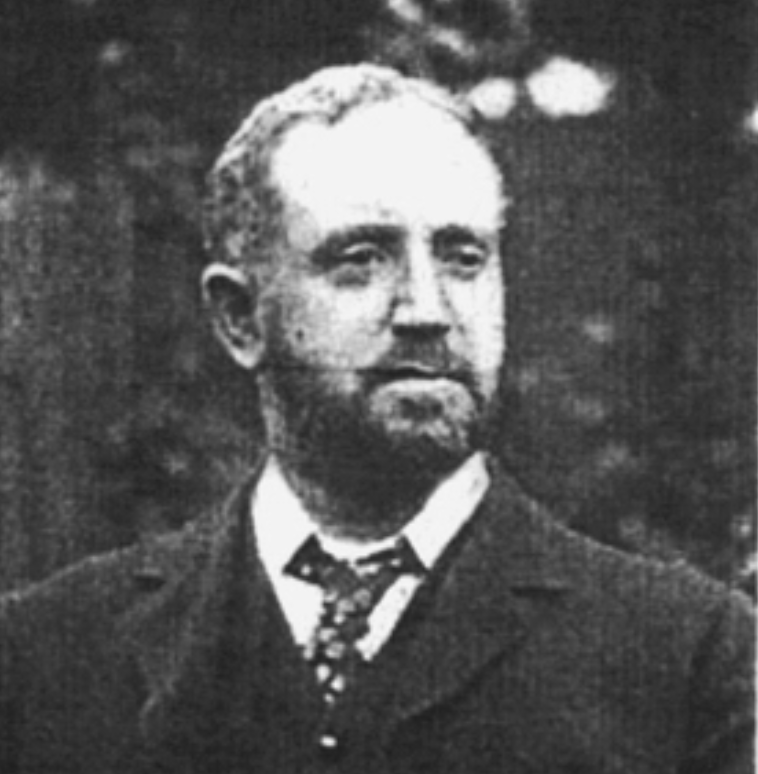
Apart from playing, they gradually introduced football into schools, W.J. Wilson, the headmaster at Oldridge Road School in Balham, being arguably the most noteworthy. He set up the South London Schools Football Association (SFA) in 1885, the first district to organise school football. SFAs in Poplar and Tower Hamlets followed soon after, and the first inter-district game took place between South London and Tower Hamlets in 1888. Other districts followed in London, and Wilson was responsible for setting up the London SFA in 1892.
District SFAs were quickly set up in other parts of the country during the early 1890s, including Manchester (1890), Liverpool (1891), Nottingham (1891), Sunderland (1893) and Newcastle (1894).
Drama
School plays have been around since ancient times. The Greeks and Romans saw them as necessary practice for lessons in rhetoric and public speaking, while plays in the Middle Ages concentrated on religious stories with the intention of introducing the Bible and teaching morals.
From the time of the Renaissance, school plays became more formal with some classical texts being performed in grammar schools. Acting was seen as a means of improving speaking, memory and confidence at this time.
In the 1960s, teachers and theorists such as Dorothy Heathcote and Gavin Bolton helped establish the idea that drama could be used to develop thinking, empathy, discussion, and understanding across the curriculum, not just to prepare school productions.
Drama is not a statutory part of the National Curriculum, although GCSE Drama and A Level Drama and Theatre can be sat in some schools. At Key Stage 4, schools must offer at least one subject from the arts area, although drama itself is not specifically required.
Literacy Level Estimates
The figures in the following table, collated by ChatGPT 5.4, are guestimates. The older the date the less accurate they are likely to be. In essence, we are dealing with the simple ability to read (and possibly write).
| Period | Region | Estimated literacy level | Notes |
| c. 500–300 BCE | Ancient Greece | ~5–15% | Literacy was a minority skill overall, though classical Greece was relatively literate by ancient standards. |
| 27 BCE – 476 CE | Roman Empire | ~5–20% | Lower figures more likely in rural areas and in the outer reaches of the empire. |
| c. 1100–1300 | England | Probably under 10% overall | Literacy was concentrated among clergy, officials, merchants, and some urban groups. Reading ability may have been more widespread than writing. |
| c. 1400–1500 | England | ~6–12% overall | Estimates vary, but literacy remained limited to a minority of the population. |
| c. 1530 | England | ~8–11% overall | Tudor-era literacy was rising slowly, but most of the population was still illiterate by modern standards. |
| c. 1640s | England | Roughly high teens overall | A common estimate is about 30% of adult men and 10% of adult women literate, implying an overall rate in the high teens. |
| c. 1750 | England | ~25–35% overall | Literacy increased substantially in the 18th century, especially among men and in towns. |
| c. 1800 | England | ~50% overall | By 1800, about half the adult population was literate on standard historical measures. |
| c. 1840 | England | ~55–60% overall | Around two-thirds of men and about half of women were literate. |
| c. 1900 | England / Britain | ~75% on strict historical measures; practical reading ability likely higher | By 1900 Britain had reached mass literacy, though exact rates depend on how literacy is defined. |
| Present day | United Kingdom | ~99% basic literacy | Basic literacy is nearly universal by modern international measures. |
| Present day (functional literacy) | England | 18% of adults aged 16–65 have very poor literacy skills | Functional literacy is lower than basic literacy, so modern struggles with reading and writing still affect a significant minority. |
Bibliography & Further Reading
https://en.wikipedia.org/wiki/History_of_education
https://www.britannica.com/topic/education
https://www.schoolsmith.co.uk/history-of-education/
As mentioned, a number of my potted histories touch on the subject of education: Roman Britain, Anglo-Saxons, Norman and Angevin Periods, Industrial Revolution and the Victorian Age, London, Liverpool, Edinburgh, Sunninghill & Ascot, and Sunningdale.
Acknowledgements
All images have been found on the Internet. The captions are links to the creators. Please contact me if you consider that I have infringed any copyright.
All errors in this document are mine.
Version History
Version 0.1 – April 2026 – very drafty
 BK .. This and That

_-_Palazzo_Nuovo_-_Musei_Capitolini_-_Rome_2016.jpg)

.jpg)


